About Us
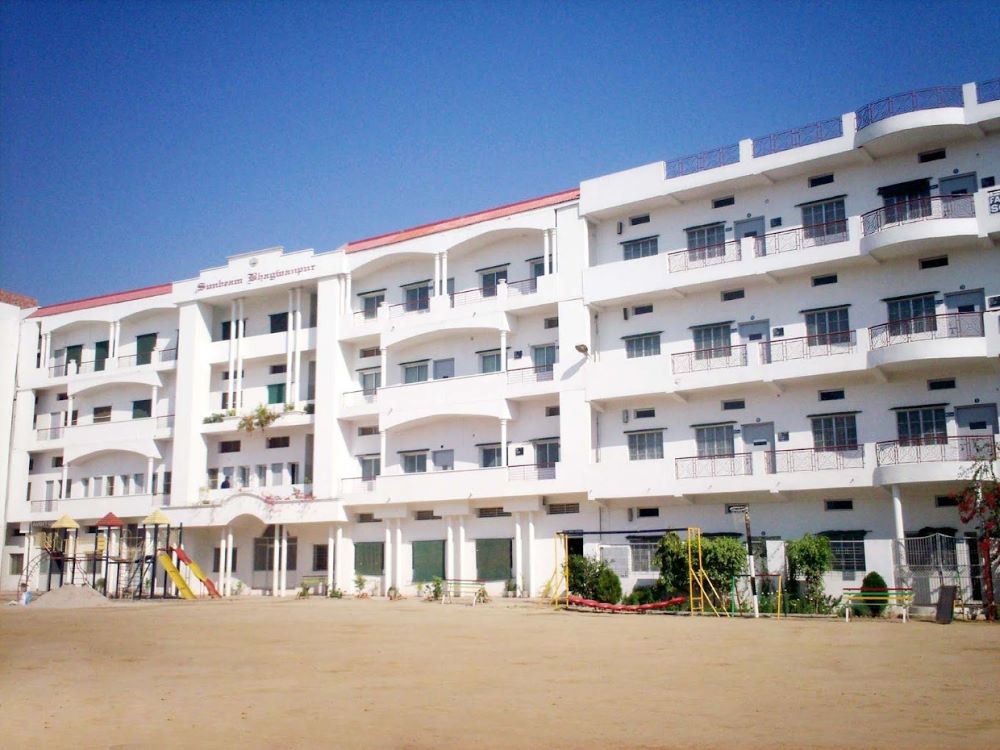
Sunbeam School Bhagwanpur from past 52 with an aim to produce promoters of social transformation endowed with the spirit of service to mankind through moral and academic excellence of the best of the East and the West. The school campus is fully airconditioned along with the school buses plying on the routes. We focus on the overall growth of a child along with the expertise in academics through STEAM learning. STEAM education provides an interdisciplinary learning model where students can apply content knowledge as well as key skills. High-quality STEAM education prepares graduates to face real-life problems with more creativity, critical thinking, and effectiveness. True learning occurs when children explore and discover for themselves through experiential processes and practices, thus STEAM learning has been an integral part of our school pedagogy much before Art Integrated Learning and NEP made it compulsory in school curriculum. This integration of STEAM education occurs at multiple levels, the two most important of which are at student level by learning science, technology, engineering and maths along with the arts – creative and performing and the other level is teaching methods where we impart science education through art and craft and vice versa. The Active Learning Lab for the kindergarten students enhances their scientific as well as communication skills. The participation of these tiny tots in arts and crafts also help them to unconsciously but organically imbibe mathematical and geometrical principles. We are the first school in Varanasi to have a dedicated Robotics Lab for Robotics helps exemplifying technology directly, by designing and programming the robot, students also learn about science, engineering, arts and maths and get an understanding of how these subjects link together. Our school has also set up Atal Tinkering Lab to turn students as Neoteric Innovators'. The Virtual Lab is an interactive environment for creating and conducting simulated experiments: a playground for experimentation. The Science Portal called Eureka also provides students scopes for Experiential Learning. Lesson Plans based on Inquiry Based Learning Design, Project Based Learning, Design Thinking are some of the innovative ways through which learning happens in our school. On the other hand language lessons incorporate many lessons imparting scientific learning and scientific methodology. Here’s an example of High School students studying physics and design by creating a custom desk organizer, specifically designed for students. Students created the image below using CAD software, and students plan to use a 3D printer to bring their designs to life. Not only were students deeply engaged because they were creating– by designing from scratch a product for other students like them– but they were also more inclined to research, iterate, and innovate because of it. Few more such creative endeavours have been designing Smart Cities in which they wish to reside. Creating a life support system ie a mini ventilator which will provide oxygen as per body needs. A House Construction for Space which will protect the residents from Radiation. STEAM is also fruitfully used by Social Science Department in through Visual Thinking Strategies. The teachers use art to teach visual literacy, thinking, and communication skills—listening and expressing oneself. Growth is stimulated by several things: looking at art of increasing complexity, answering developmentally based questions, and participating in peer group discussions carefully facilitated by teachers. The students of Junior School exhibited their wonderful presentations in Class Project on the topic Transport. Variety of tools like PPTs, models, sway, rap, collage, dance & poems etc were presented by them as the part of AIL; virtual tour from Varanasi to Meghalaya, using different modes of transport was an amazing experience . Using chart papers, newspapers and organic colour & crayons , children learnt about shapes & sizes through a fun activity of making masks. Using STEAM education results in students who take thoughtful risks, engage in experiential learning, persist in problem-solving, embrace collaboration, and work through the creative process. These are the innovators, educators, leaders, and learners of the 21st century!